What Are Acne And Acne Scar Treatments?
Private Dr. Arslan Polyclinic
What Are the Types of Acne Scars?
An acne scar refers to permanent structural changes in the skin that occur after the active acne process has healed. Not every acne scar has the same structure; some appear as depressions, some as raised scars, while others may only appear as changes in skin color. For this reason, if acne scar types are not correctly identified, the treatment applied may be insufficient or inappropriate. The type, depth, and distribution of the scar form the basis of treatment planning.
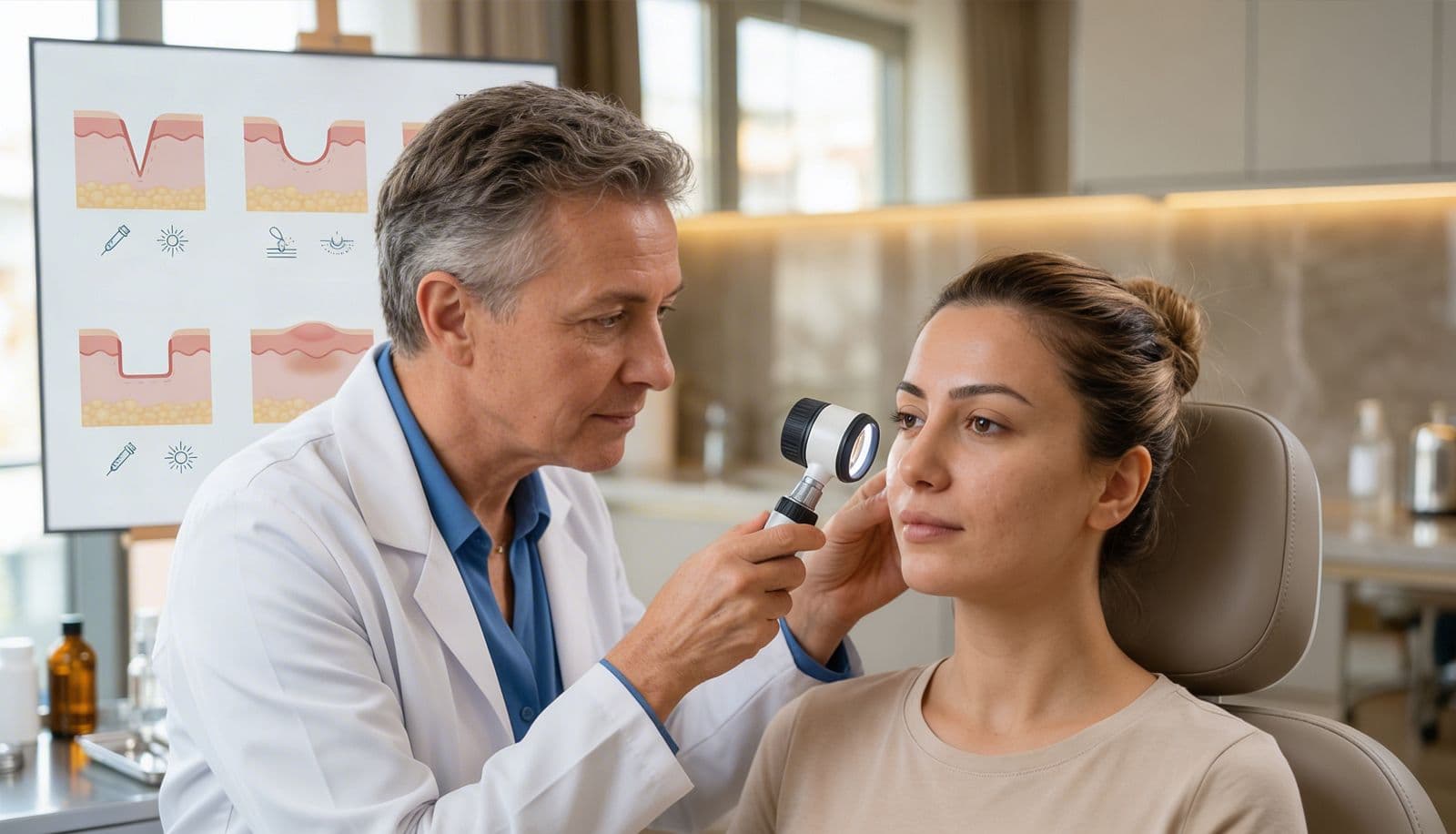
Among the public, the concepts of “acne marks” and “acne scars” are often confused. However, a mark is usually a temporary change in skin color, while a scar represents a disruption of the skin’s structural integrity. In particular, atrophic scars (depressed scars) and hypertrophic/keloid scars (raised scars) occur through different mechanisms and require different treatment approaches. Therefore, accurate classification of acne scar types is critical for achieving lasting and balanced results.
QUICK MENU
In the following sections of this page, you can find the topics listed below. Simply tap on any heading to quickly access the relevant section.
- Types And Characteristics Of Acne Scars
- What Is An Atrophic Acne Scar (depressed Scar)?
- What Are Hypertrophic And Keloid Acne Scars?
- What Is The Difference Between An Acne Mark And An Acne Scar?
- Which Type Of Acne Scar Is The Most Difficult To Treat?
What You Should Know About Acne Scar Treatments
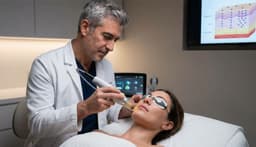
Acne scars are permanent tissue changes and depressions that occur on the skin after acne. Different dermatological methods aimed at renewing the skin and stimulating collagen production can be used in the treatment of these scars. In the video below, you can find general information about the methods used in acne scar treatment and in which situations they may be preferred.
Acne Scar Treatments Explained in the Video
- Fractional laser
- Gold needle radiofrequency
- Subcision
- Chemical peeling
- PRP and regenerative treatments
Learn More About ABORTION
Feel Free To Consult Our Doctor


Our experienced team is currently online to answer all your questions.
Let us call you
Send us your phone number now to get more information.
Types and Characteristics of Acne Scars
Acne scars are permanent tissue changes that develop after the inflammatory process in the skin. These scars may appear in different shapes and depths, and different treatment methods may be applied depending on the scar type. In the table below, the most common acne scar types and their main characteristics are compared.
In summary, acne scars can be classified as depressed (atrophic) or raised (hypertrophic/keloid). Correctly identifying the scar type is important when planning the appropriate treatment method.
What Is an Atrophic Acne Scar (Depressed Scar)?
Atrophic acne scars are depressed scars that occur due to collagen loss in the skin. They are among the most common types of acne scars and usually develop after severe or deep acne. When the skin cannot produce sufficient and balanced collagen during the healing process, tissue loss occurs and a sunken appearance forms on the skin surface.
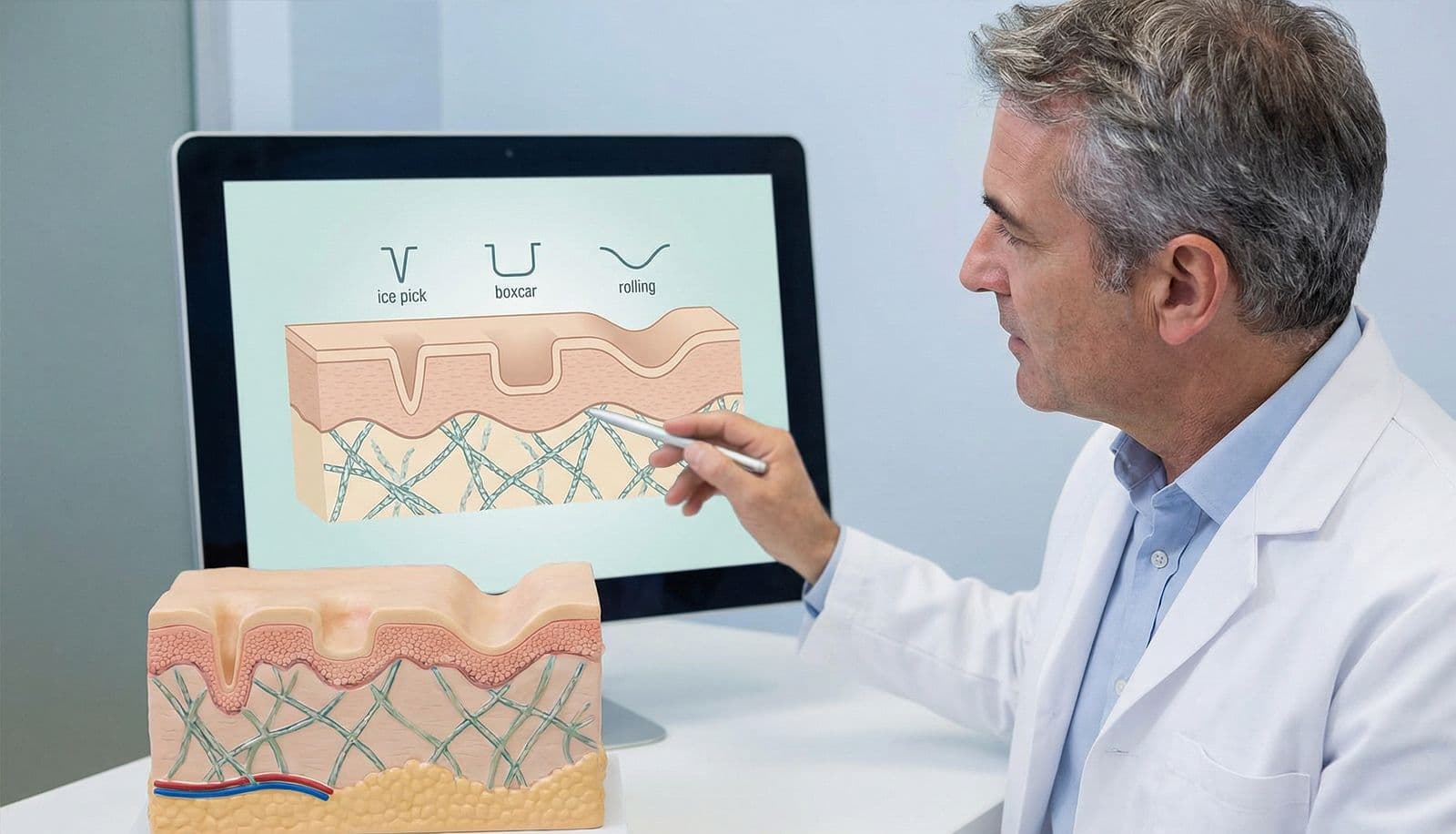
Atrophic scars are divided into three subtypes. This classification is important for determining the appropriate treatment plan:
- Ice pick scars: Narrow, deep scars that resemble needle punctures.
- Boxcar scars: Depressions with sharp edges that appear round or oval like craters.
- Rolling scars: Broad, wave-like scars that create an uneven skin surface.
Because each subtype varies in depth and width, the treatment strategy is also determined accordingly. In particular, fibrotic bands beneath the skin play an important role in rolling-type scars.
What Are Hypertrophic and Keloid Acne Scars?
Hypertrophic acne scars are raised and firm scars that occur when the skin produces excessive collagen during the healing process. They are most commonly seen on the chest, back, and jawline. In these types of acne scars, the issue is not tissue loss but rather excess tissue formation. The lesion usually remains limited to the area where the acne occurred.
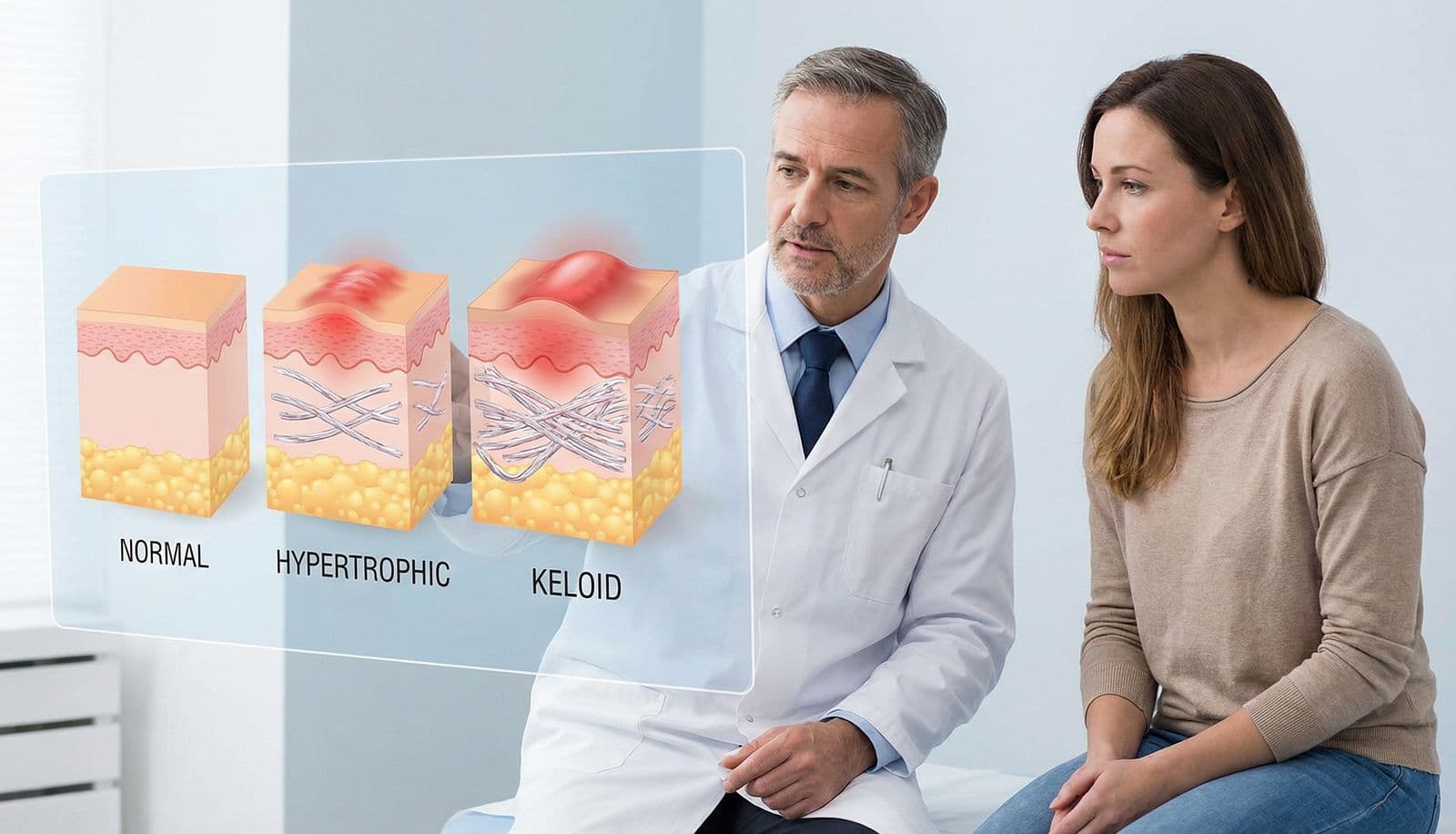
Keloid scars differ from hypertrophic scars because they can extend beyond the original lesion and spread into surrounding tissue. Genetic predisposition is an important factor in the development of these scars. The treatment of keloid acne scars is completely different from the treatment of depressed scars, as the goal is to reduce collagen production and control the raised tissue.
What Is the Difference Between an Acne Mark and an Acne Scar?
Not every color change that occurs after acne is considered a scar. Acne marks usually appear as redness after inflammation (post-inflammatory erythema) or brown discoloration (post-inflammatory hyperpigmentation). These marks may fade over time, and in most cases the structural integrity of the skin remains intact.
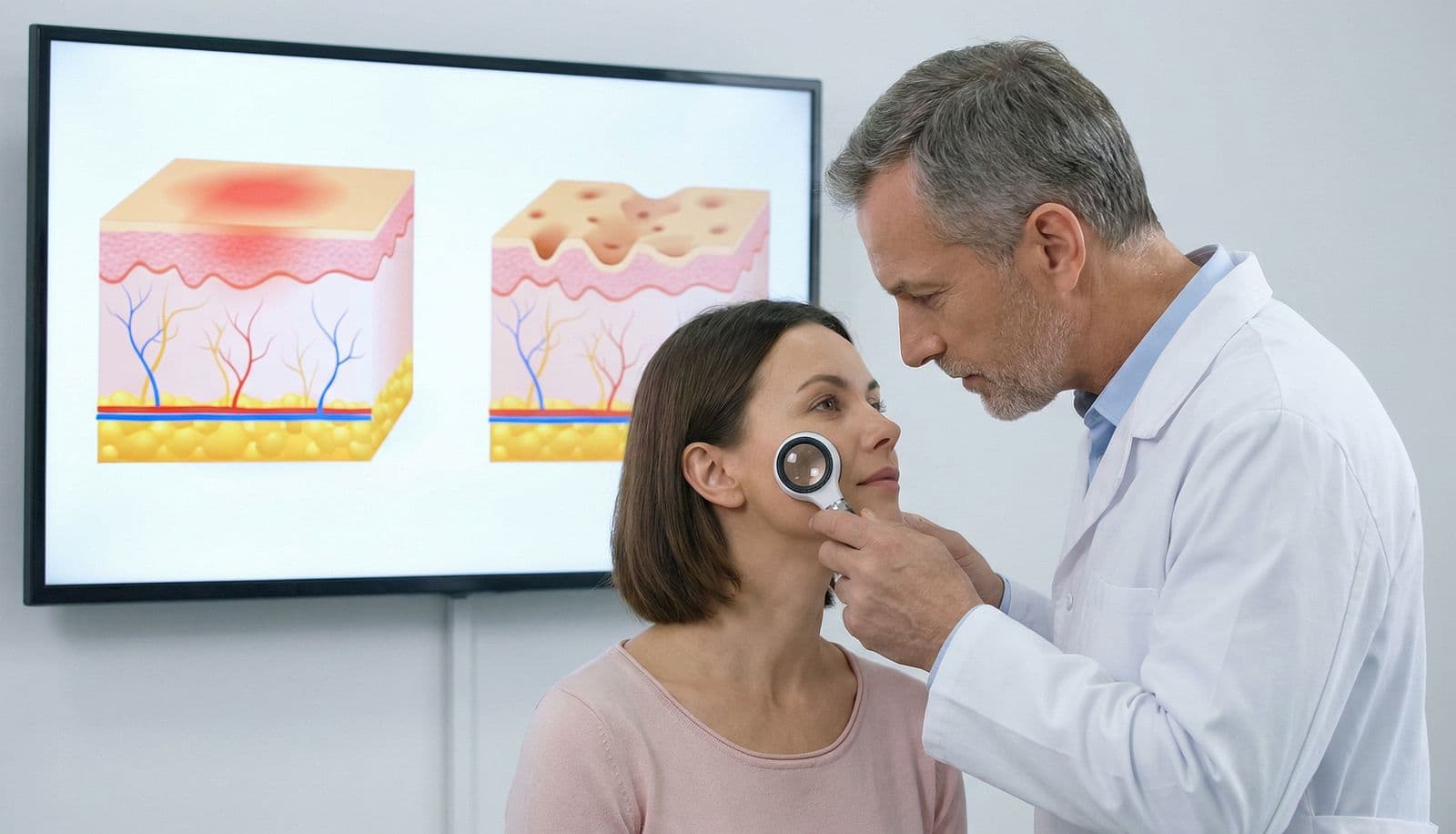
In contrast, an acne scar occurs when the skin tissue is structurally damaged and presents as a visible depression or raised area on the skin surface. Irregularities that can be felt when touching the skin are often an indication of a scar. Distinguishing between these two conditions is extremely important for proper acne scar treatment planning.
Which Type of Acne Scar Is the Most Difficult to Treat?
The difficulty of treatment depends on the type and depth of the acne scar. Ice pick scars are generally considered more resistant to treatment due to their deep and narrow structure. This is because the damage extends into the deeper layers of the dermis, and superficial treatments alone may not be sufficient.
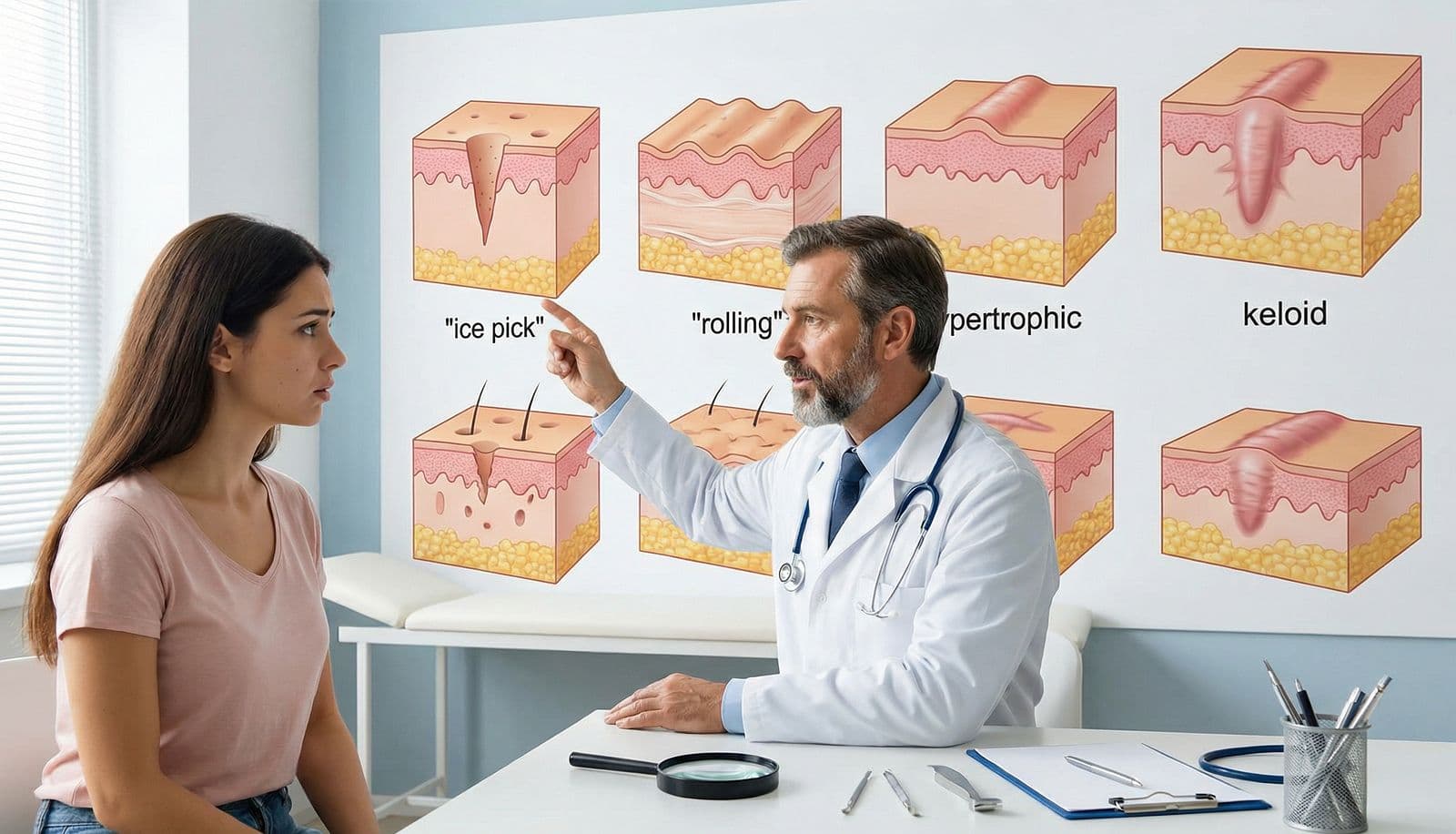
Rolling scars, on the other hand, may require different techniques because they are associated with fibrotic bands beneath the skin. In hypertrophic and keloid scars, the problem is excessive collagen production, so the treatment approach is entirely different. Therefore, there is no single answer to the question of which acne scar is the most difficult to treat. However, deep scars that have existed for a long time usually require a longer treatment process. Correct classification and a personalized treatment approach are the most important factors determining treatment success.
Learn More About ABORTION
Feel Free To Consult Our Doctor
Our experienced team is currently online to answer all your questions.
Frequently Asked Questions About Types of Acne Scars
Acne scars occur as a result of permanent changes in the skin tissue after acne. These scars can appear in different shapes and depths, and each may require different treatment approaches. Below you can find the most frequently asked questions about acne scar types.
An acne scar is a permanent change in the skin tissue that occurs after acne lesions heal. These scars usually appear as depressed or irregular areas on the skin surface.
Acne scars are generally divided into three main groups: ice pick, boxcar, and rolling scars. This classification is based on the shape and depth of the scars in the skin.
An ice pick acne scar is a type of scar that appears as narrow and deep pits in the skin. These scars often look as if the skin has been punctured by a sharp object.
A boxcar acne scar appears as a wider depression with clearly defined edges. These scars are usually round or oval in shape.
A rolling acne scar creates a wavy and uneven appearance on the skin surface. These scars are typically associated with fibrotic bands beneath the skin.
The different shapes of acne scars are related to the severity of inflammation in the skin and the amount of collagen loss that occurs in the skin tissue.
Acne scars and acne spots are not the same. Acne spots are pigment changes, whereas acne scars are structural changes in the skin tissue.
Acne scar treatment is planned with different methods depending on the type of scar. Therefore, the treatment approach may vary according to the type and depth of the scars.
More Content




Learn More About ABORTION
Feel Free To Consult Our Doctor
Our experienced team is currently online to answer all your questions.